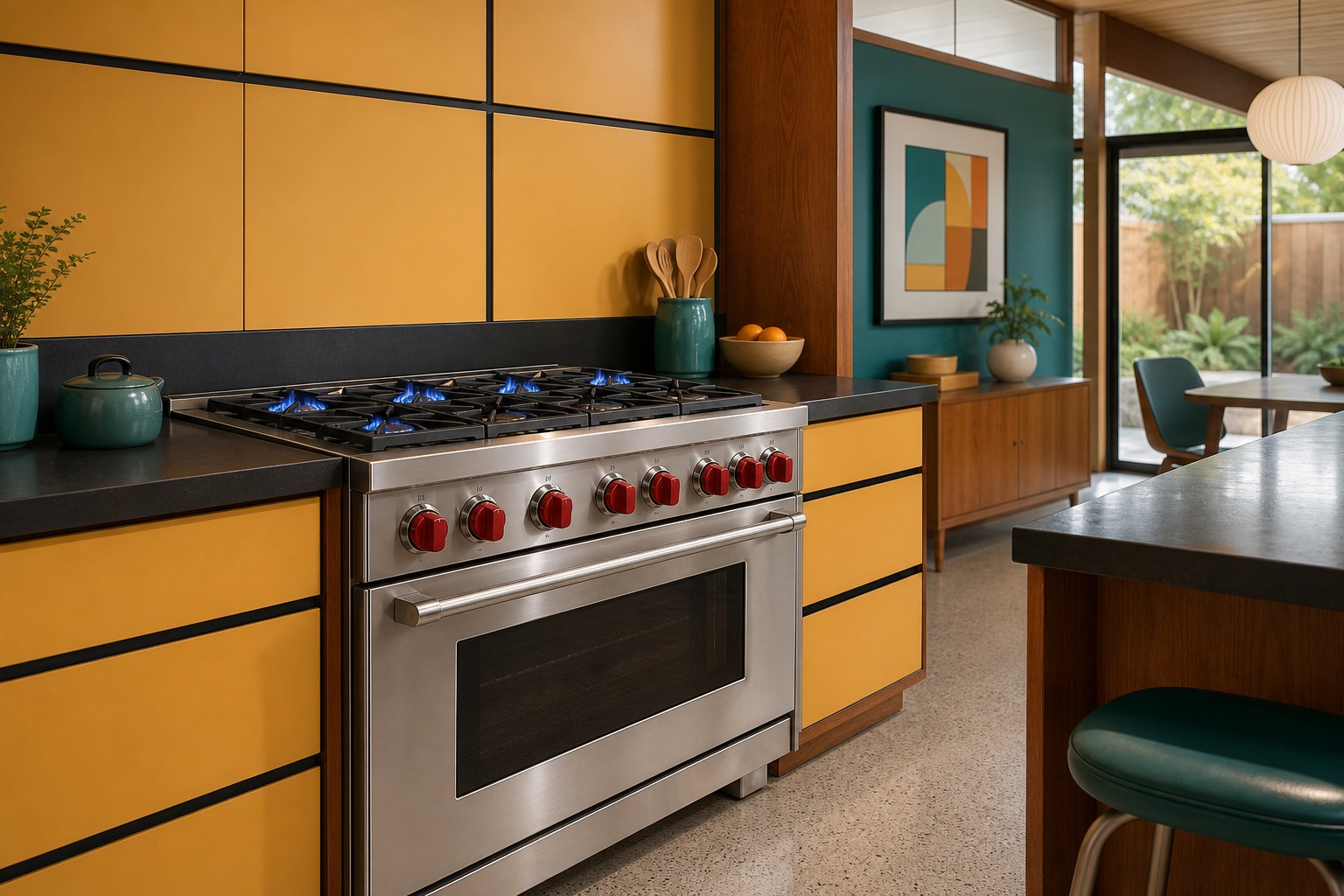
Wolf cooking suites are common in the remodeled kitchens around Old Mountain View and Castro Street, and the call we hear most often about them is simple to describe: one surface burner just isn't lighting the way the others do. The flame sits low, leans to one side, or shows yellow tips instead of a clean blue ring.
Nine times in ten it is not the part owners fear. Here is what an uneven Wolf burner flame actually tends to mean.
The burner cap and ports come first
A Wolf sealed burner throws its flame through a ring of small ports under a removable cap. Anything that blocks those ports — a boil-over, grease, or a cap that has been set back slightly off its locating pins — distorts the flame. A cap sitting a hair off-center is the single most common reason a burner lights unevenly. Lifting the cap, clearing the ports, and seating it squarely fixes a large share of these calls on the spot.
Yellow tips and a lazy flame
A clean burner burns blue. Yellow tips mean the air-to-gas mix is off, usually because a port is partly blocked or the burner is not seated right rather than anything wrong with the valve. A flame that seems generally low across the whole cooktop is a different signal and points upstream — a gas-supply or regulator question worth checking before condemning any single burner.
When it is the igniter, not the flame
Sometimes the complaint is really about lighting, not flame quality — the burner clicks but is slow to catch. That is often moisture or a soiled spark electrode, and it is a cooking-side fix, not a sealed-system one. We keep Wolf work strictly to the cooking suite: ranges, rangetops, cooktops and ovens.
What to try before you call
Let the burner cool, lift the cap and grate, and check that the cap sits flat and centered on its pins with the ports clear. If the flame is still uneven or yellow after a clean reseat, or if the whole cooktop runs low, that is the point to have it looked at properly.