
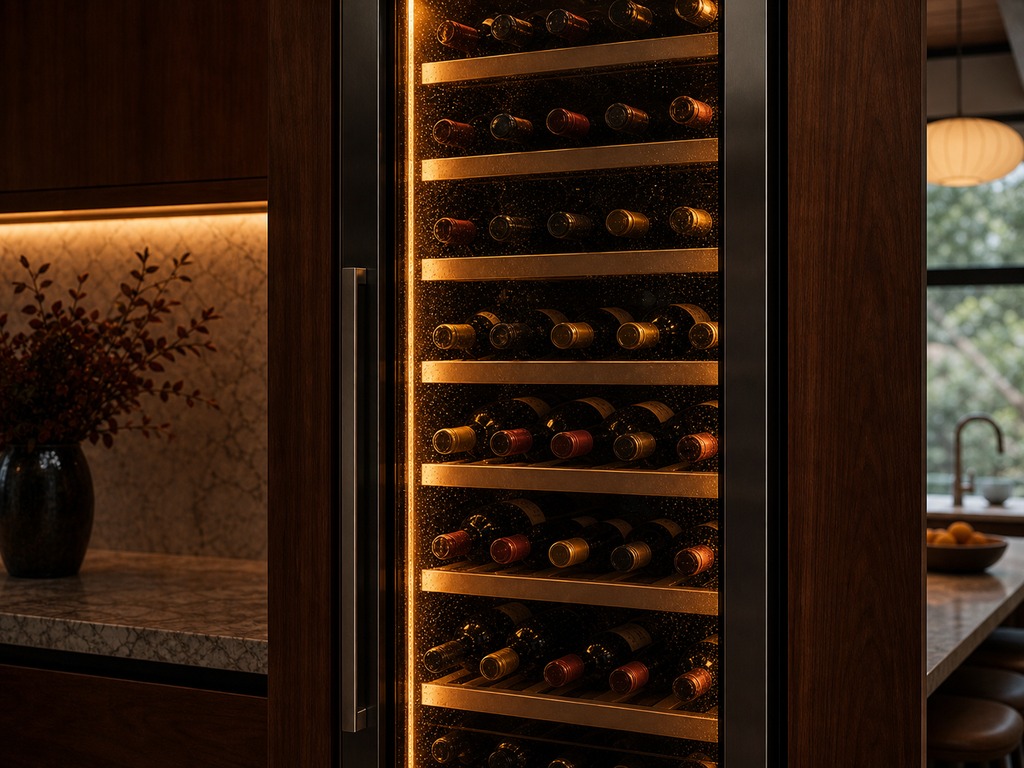
Walk through enough remodeled kitchens off Castro Street and around Cuesta Park and you start to notice how many of them now build a Sub-Zero wine cooler into the cabinetry — a dedicated column or an undercounter unit holding a collection that often means more to the owner than the kitchen around it. So when one starts running warm, the worry is real, even when the fix usually isn't dramatic.
Sub-Zero builds genuine built-in wine storage, and like its refrigerators those units are tightly engineered: a sealed refrigeration system, precise dual-zone control, UV-tinted glass, and a cabinet sealed against Mountain View's mild, marine-influenced air. Knowing the order in which they tend to fail is half the repair.
The dual-zone control and its sensor
Most Sub-Zero wine units split into two independently set zones — reds a touch warmer, whites and sparkling cooler — with a thermistor reading each compartment and a damper steering chilled air between them. When one zone holds its set point and the other drifts, the unit is almost never short of refrigerant; it is a sensor reading wrong or a damper not moving as commanded. A thermistor that has drifted out of spec tells the control the cabinet is colder than it is, so the zone slowly creeps warm while the display insists everything is fine. That is a repair we make often, and it is far less involved than the sealed-system work owners brace for.
Airflow, the condenser and the evaporator fan
A wine column moves a small, steady volume of cold air, so anything that chokes that airflow shows up fast. The condenser, tucked behind the grille, loads with dust and pet hair more quickly than people expect in a cabinetry-tight install, and a loaded condenser makes the whole unit work harder and drift warm on a warm afternoon. Inside, the evaporator fan is what actually distributes the cold; a fan that has slowed, gotten noisy, or stalled leaves the top of the cabinet warmer than the bottom. Both are common, both are wear items, and both are straightforward to put right once the cabinet is opened up properly.
Seals, UV glass and the cost of vibration
A wine unit lives or dies by its door. The gasket has to pull the door flush every time, and the glass is UV-tinted to protect the bottles from light; a seal that no longer seats lets the cabinet humidity and temperature wander, and a glass-edge seal that has failed shows up as condensation or a foggy panel. Worth naming too is vibration — a compressor mount or fan bearing that has started to buzz transmits into the racks, and constant micro-vibration is exactly what disturbs sediment in the bottles you are trying to protect. A unit that has gotten louder is telling you something before it ever drifts warm.
Repair or replace
The sealed system — compressor and refrigerant loop — is the one genuinely major failure, and it is also the rarest. A slow refrigerant loss shows up as a wine cooler that runs almost continuously yet still cannot hold temperature on a hot day. On a built-in Sub-Zero wine unit that work is usually still worth doing: the cabinetry is fitted to the unit, the build quality is high, and replacement means a custom panel and a new install, not a quick swap. We will put gauges on it, show you the pressures, and give you an honest repair-versus-replace read before any parts are ordered — by phone or through the booking link, never a form.