
Unusual noise · symptom guide
Sub-Zero making noise in Mountain View
A Sub-Zero is never silent, but a new buzz, hum, click, rattle or gurgle is worth understanding. Most noises trace to a moving part — an evaporator or condenser fan catching on frost, the compressor working harder, the ice maker cycling, or simple vibration into the cabinetry. Some are perfectly normal; others are an early warning. We locate the exact source, tell you honestly whether it can wait, and repair what needs it with genuine OEM parts. The $89 service call is waived with the repair and labor is backed for 365 days.
- Buzzing, humming, clicking, rattling or gurgling — pinpointed
- What’s normal vs. an early warning, explained honestly
- $89 waived with repair · genuine OEM parts
$89 service call, waived with repair · 365-day warranty on all labor
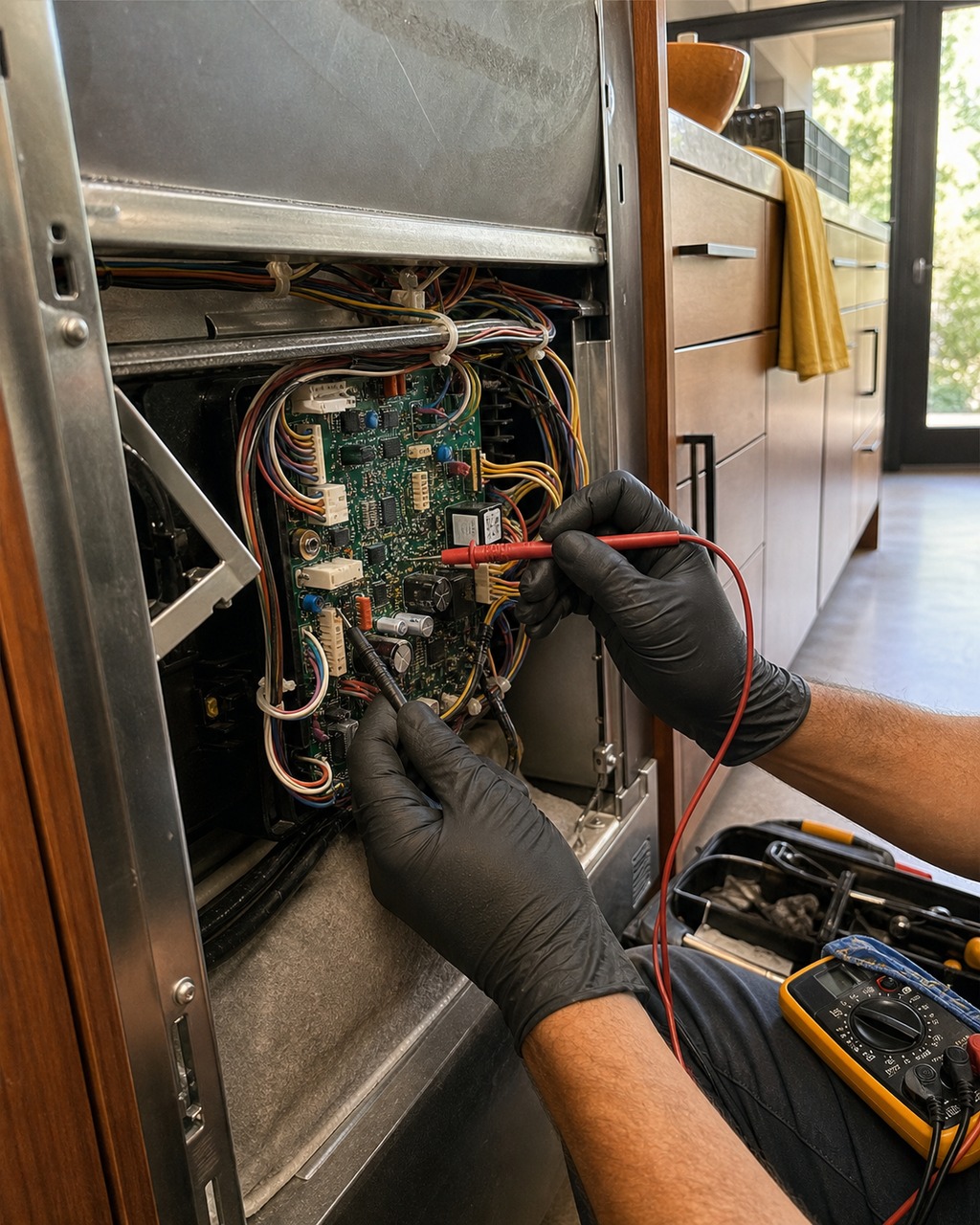
What each sound usually means
Different noises come from different places. A buzz or rattle is most often an evaporator fan blade clipping a light coat of frost, or a condenser fan with worn bearings or trapped debris. A steady hum that’s grown louder usually points to the compressor working harder than it should, sometimes as an early sign of sealed-system strain. Sharp clicks and a brief water buzz on a cycle are typically the ice maker filling and ejecting — normal in moderation. A soft gurgle or pop is refrigerant moving and the cabinet flexing during defrost, and is generally nothing to worry about.
The trick is matching the sound to the part. A noise that’s rhythmic with the fan, constant with the compressor, or timed to the ice cycle each tells a different story, and we listen and test rather than swapping parts on a guess.
Symptom guide
Noise → likely source → what we do
A quick map from the sound you’re hearing to the most likely source on a Sub-Zero built-in.
| Sound | Likely source | What we do |
|---|---|---|
| Buzz or rattle, rhythmic | Evaporator fan clipping frost | Inspect the fan and clear/clear the coil; replace if worn |
| Whirring that won’t settle | Condenser fan bearings or debris | Clean and test the condenser fan; renew if needed |
| Hum that’s grown louder | Compressor working harder | Test the compressor electrically and check the sealed system |
| Clicks and a brief water buzz | Ice-maker fill and eject cycle | Confirm it’s normal; check the valve if excessive |
| Low hum into cabinets / wine rack | Vibration transmitted to millwork | Check mounts and isolation; adjust or dampen |
Matching the sound to the part avoids replacing components that are fine.
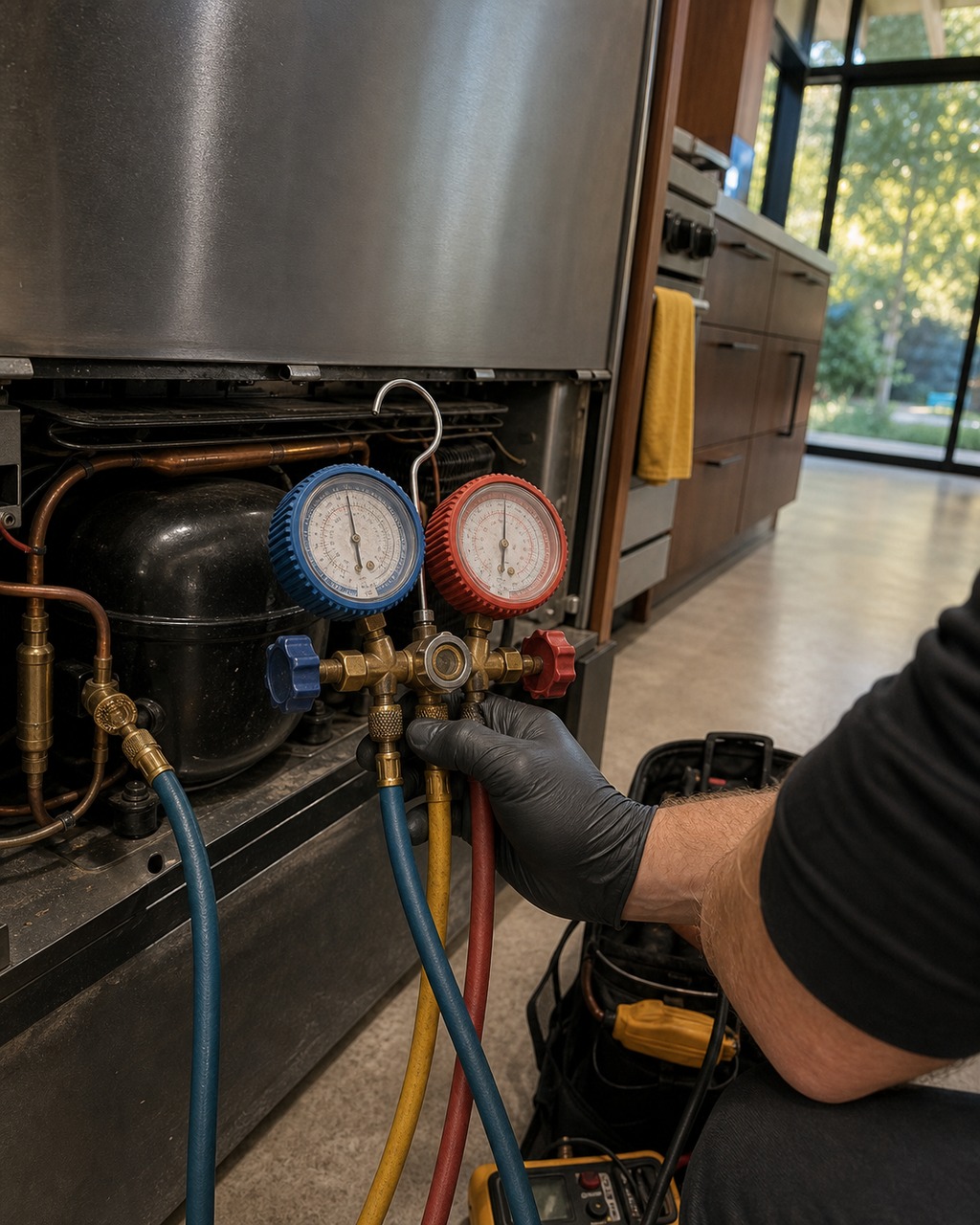
Before we arrive
Helpful checks you can do
A little detail about the noise speeds up the diagnosis.
- Note when the noise happens — constantly, with the fan, or only on an ice cycle.
- Check whether the cabinet is also warming, which raises the priority.
- Make sure nothing is resting on or against the unit and transmitting buzz.
- Clear any obvious dust from the condenser grille if it’s easy to reach.
- A short phone video with sound helps us identify the part before we arrive.
Quick check
Locate the source in two minutes
- 01
Time the noise
Notice whether it’s constant, rhythmic with a fan, or only during the ice cycle — each points to a different part.
- 02
Find the direction
Listen at the top grille, inside the cabinet and at the base to tell a fan from the compressor.
- 03
Check for contact
Make sure nothing is leaning against the unit or wedged in the niche and turning a faint hum into a buzz.
- 04
Note any warming
If temperatures are also drifting, treat it as urgent; otherwise capture a video and book a visit.
Why noise carries in Mountain View kitchens
Where the unit lives changes how a noise reads. The open-plan great rooms of the Monta Loma Eichlers carry kitchen sound straight through the post-and-beam space, so a fan buzz that would hide in a closed kitchen becomes the loudest thing in the house. In those same homes the built-in sits in a shallow niche with little clearance, and a slightly out-of-balance fan can resonate against the cabinet and amplify.
In the Cuesta Park and Waverly Park estate kitchens, vibration is the usual complaint — a compressor or fan transmitting a low hum into fitted cabinetry and adjacent wine racks, where bottles can even rattle. Isolating whether the noise is the appliance itself or vibration passing into the millwork is part of the diagnosis, and it determines whether the fix is a part or a mounting adjustment.
When you can keep using it — and when to stop
A light, intermittent fan buzz or the normal sounds of an ice cycle can usually wait for a scheduled visit. But a loud grinding or screeching fan, a compressor that’s become noticeably louder while the cabinet is also warming, or a buzz paired with rising temperatures should be looked at promptly — those are the cases where ignoring the sound turns a small repair into a larger one. If the noise comes with warming, treat it like a cooling problem and move perishables to a backup.
How we find the source
We isolate the noise by part: run the fans and listen for frost contact or bearing wear, check the compressor and its mounts, observe an ice cycle, and feel for vibration passing into the cabinet. You get an itemized quote before any work. Fan and mounting fixes are usually same-visit; anything pointing to the sealed system gets a proper pressure and electrical test first. Every repair uses genuine OEM Sub-Zero parts with a 365-day labor warranty.
Pricing
Typical noise-repair ranges
| Repair | Draft range |
|---|---|
| Evaporator fan motor | $300–$650 |
| Condenser fan motor | $280–$560 |
| Mount / vibration isolation | $150–$340 |
| Ice-maker valve / module | $275–$650 |
| Compressor / sealed system | $1,450–$3,600 + parts |
Draft ranges only; the $89 service call is waived with the repair.
Reviews
What Mountain View homeowners say
In our open Eichler great room the fridge buzz was impossible to ignore. They found the evaporator fan clipping frost, sorted the defrost side and replaced the fan. Quiet again, and they explained why the open layout made it so loud.
A low hum was rattling the bottles in our built-in wine rack. They traced it to vibration into the cabinetry and fixed it with a mount adjustment instead of selling me a part. Honest and effective.
Compressor had gotten noticeably louder and the fridge was creeping warm. They tested it properly, caught a sealed-system issue early, and repaired it with OEM parts. Glad I didn’t wait. Year of warranty too.
FAQ
Frequently asked questions
What are the normal sounds a Sub-Zero makes?
A low compressor hum, the whir of fans, clicks and a brief water buzz when the ice maker cycles, and soft gurgles or pops as refrigerant moves and the cabinet flexes during defrost are all normal. A new, louder or grinding noise is what’s worth investigating.
Why is my Sub-Zero suddenly buzzing or rattling?
The most common cause is an evaporator fan blade clipping a light coat of frost, or a condenser fan with worn bearings or debris. We run the fans, listen for frost contact, and confirm the part before replacing anything.
The compressor hum has gotten louder — is that a problem?
It can be. A compressor working harder sometimes signals sealed-system strain, especially on older estate units. We test it electrically and check the sealed system rather than assuming.
My bottles rattle in the wine rack beside the unit.
That’s vibration transmitted into the millwork. In Cuesta Park and Waverly Park estate kitchens we see it often; the fix is usually checking the mounts and adding isolation, not replacing a working part.
Does the open layout in an Eichler make it sound worse?
Yes. Open post-and-beam great rooms carry kitchen sound, and a built-in in a shallow niche can resonate against the cabinet, so a minor fan noise reads as loud. We isolate whether it’s the appliance or the niche.
How much does it cost to fix?
Most noise repairs run from about $150 for a mounting fix to $650 for a fan motor. Sealed-system work is higher. You get an itemized quote on-site and the $89 service call is waived with the repair.

Hearing a new buzz or hum?
Capture a short video and book — we’ll pinpoint the source and tell you if it can wait.
$89 service call, waived with repair · 365-day warranty on all labor